


Texas Personal Injury Guide
If you were hurt because someone else was careless, Texas law gives you the right to seek compensation. That right comes with strict deadlines and rules that insurance companies know well and most injured people have never heard of. This guide explains how a personal injury claim works in Texas, what can hurt your case, and when to call a lawyer. It is written for Houston-area families, in plain English.
Key Takeaways - Most Texas injury claims must be filed within two years. Claims against a city or the State may require written notice in as little as six months, or less. - You can recover even if you were partly at fault, as long as you were not more than 50% responsible. - Do not give a recorded statement to the other driver’s insurance company before you speak with a lawyer. - Compensation can include medical bills, lost wages, pain and suffering, mental anguish, and physical impairment. - Your immigration status does not take away your right to be compensated for an injury.
What Counts as a Personal Injury Case in Texas
A personal injury case is a claim for money damages against a person or business whose carelessness (negligence) caused you harm. To win, you must generally prove four things:
- Duty: the other party owed you a duty of reasonable care, such as a driver’s duty to obey traffic laws.
- Breach: they failed to meet that duty.
- Causation: that failure caused your injury.
- Damages: you suffered real losses, such as medical bills, lost income, or pain.
Common cases our firm handles include:
- Motor vehicle crashes: car, truck and 18-wheeler, motorcycle, rideshare (Uber and Lyft), and drunk-driver crashes
- Pedestrian and bicycle accidents
- Workplace, construction, and oilfield injuries, especially when the employer does not carry workers’ compensation
- Premises liability: slip and falls, falls on stairs or wet floors, negligent security, and dog bites
- Wrongful death: claims brought by a spouse, children, or parents when a loved one is killed
Texas roads see a large share of these cases. According to TxDOT, in 2025:
- 3,769 people were killed in Texas motor vehicle crashes, about one every 2 hours and 19 minutes.
- 244,534 people were injured, about one every 2 minutes and 9 seconds, and 17,420 suffered serious injuries.
- A reportable crash happened about every 59 seconds, and there was not a single day without a traffic death.
- 906 deaths (24%) involved a driver under the influence, 695 were pedestrians, and 559 were motorcyclists.
Closer to home, Harris County recorded 107,472 crashes, 503 deaths, and 2,630 serious injuries in 2025. Fort Bend County had 57 deaths, Brazoria 42, Galveston 33, and Wharton 11. TxDOT CRIS crash report portal, TxDOT Crash Facts
In the Houston area, I-45, I-10, US-59, Beltway 8, and the 610 Loop carry some of the heaviest commercial truck traffic in the state.
How a Texas Injury Claim Works, Step by Step
Most injury claims follow the same five stages. Many settle without a lawsuit, but preparing as if the case will go to trial is what produces fair offers.
Step 1: Free consultation. We review what happened, your injuries, and the insurance involved, and we tell you honestly whether you have a case.
Step 2: Investigation. We get the crash report, photos, video, witness statements, and the other party’s insurance information. In truck cases, we send letters requiring the trucking company to preserve driver logs, black-box data, and maintenance records before they are lost.
Step 3: Medical treatment. You focus on getting better. We gather your medical records and bills as treatment continues. We generally do not settle until your doctors understand the long-term effects of your injuries.
Step 4: Demand and negotiation. We send the insurance company a demand package showing the full value of your claim, and we negotiate.
Step 5: Lawsuit, if needed. If the insurer will not pay a fair amount, we file suit. Filing a lawsuit does not mean the case will go to trial. Many cases settle during the lawsuit, after evidence is exchanged.
Deadlines: The Texas Statute of Limitations
| Type of claim | General deadline | Source |
|---|---|---|
| Most personal injury claims | 2 years from the date of injury | Tex. Civ. Prac. & Rem. Code §16.003(a) |
| Wrongful death | 2 years from the date of death | Tex. Civ. Prac. & Rem. Code §16.003(b) |
| Claims against the State, a county, or a city | Written notice within 6 months; some city charters require less (the City of Houston requires notice within 90 days). | Tex. Civ. Prac. & Rem. Code §101.101; City of Houston Legal Department |
| Medical malpractice | Generally 2 years, with special notice and expert-report rules | Tex. Civ. Prac. & Rem. Code Chapter 74 |
| Injured child | The 2-year clock generally does not start until age 18 | Tex. Civ. Prac. & Rem. Code §16.001 |
Why you should not wait even if you have time: surveillance video is often recorded over within days, vehicles are repaired or scrapped, and witnesses forget. Insurance companies use the time you spend waiting to build their defense.
Insurance: Who Pays and How Much
Texas is an at-faultstate. The person who caused the crash, through their liability insurance, is responsible for your losses.
The other driver’s liability insurance. Texas requires minimum coverage of $30,000 per injured person, $60,000 per accident, and $25,000 for property damage (Tex. Transp. Code §601.072). In a serious injury case, those minimums are often not enough.
Your own coverage. Check your policy for these: - Personal Injury Protection (PIP): pays medical bills and lost wages regardless of fault. Texas insurers must include at least $2,500 unless you rejected it in writing. - Uninsured/Underinsured Motorist (UM/UIM): pays when the at-fault driver has no insurance or not enough. Texas insurers must offer it, and you have it unless you rejected it in writing (Tex. Ins. Code ch. 1952).
Other sources of coverage. These can include the at-fault driver’s employer (if they were working), a trucking company’s commercial policy, rideshare company policies, and property owners’ or business liability policies.
Talking to the insurance company. Report the accident to your own insurer, because your policy requires it. You do not have to give a recorded statement to the other driver’s insurance company. Their adjuster’s job is to pay as little as possible. Once you hire us, all insurance communication goes through our office.
Fault: The Texas 51% Rule
Texas follows modified comparative fault, also called proportionate responsibility (Tex. Civ. Prac. & Rem. Code ch. 33).
- If you are found 50% or less at fault, you can recover, but your damages are reduced by your percentage of fault.
- If you are found more than 50% at fault, you recover nothing.
Example: A jury finds your damages are $100,000 and assigns you 20% of the fault. You recover $80,000. If the jury assigns you 51%, you recover nothing.
This is why insurance adjusters often suggest you were speeding, distracted, or not wearing a seatbelt. Every percentage point they shift to you saves them money. Evidence gathered early, such as photos, video, and witness statements, is the best defense against these arguments.
What Your Case May Be Worth
No honest lawyer can give you a number before reviewing your medical records and the available insurance. Texas law allows recovery for:
Economic damages (losses with a dollar figure): - Past and future medical expenses. Texas limits recovery to amounts actually paid or incurred (Tex. Civ. Prac. & Rem. Code §41.0105). - Lost wages and loss of future earning capacity - Property damage
Non-economic damages (real losses without a receipt): - Physical pain and suffering - Mental anguish - Physical impairment - Disfigurement - In wrongful death cases, loss of companionship and society
Exemplary (punitive) damages. These are available only with clear and convincing proof of gross negligence, malice, or fraud, such as some drunk-driving cases. They are capped by statute (Tex. Civ. Prac. & Rem. Code ch. 41).
What drives value. The main factors are the severity and permanence of the injury, the total medical bills, time missed from work, the clarity of fault, the available insurance, and the quality of the evidence.
Mistakes That Hurt Injury Claims
- Waiting to see a doctor. Gaps in treatment are the most common argument insurers use to reduce claims.
- Giving a recorded statement to the other side’s insurer.
- Accepting a quick settlement before you know the full extent of your injuries. Once you sign a release, the claim is over.
- Posting on social media. Photos and comments are routinely used against injured people.
- Not following your doctor’s treatment plan.
- Throwing away evidence: damaged clothing, photos, receipts, and the names of witnesses.
- Missing the deadline, especially the short notice period for government claims.
Special Situations
18-wheeler and commercial truck crashes. These cases involve federal safety regulations, multiple insurance policies, and companies that send investigators to the scene within hours. Texas law also has special trial procedures for commercial vehicle cases (Tex. Civ. Prac. & Rem. Code ch. 72). Evidence must be preserved quickly.
Workplace injuries and “non-subscriber” employers. Texas lets employers choose not to carry workers’ compensation. If your employer is a non-subscriber, you may be able to sue for negligence, and the employer loses certain defenses, such as blaming you or a co-worker (Tex. Labor Code §406.033). This comes up often in construction, warehouse, and oilfield work.
Rideshare accidents. Uber and Lyft coverage depends on whether the driver had the app on, was heading to a pickup, or had a passenger. The limits vary by phase.
Injuries caused by a government vehicle or employee. Claims under the Texas Tort Claims Act have short notice deadlines, limits on what can be recovered, and caps on damages (Tex. Civ. Prac. & Rem. Code ch. 101).
If you are not a U.S. citizen. Your immigration status does not take away your right to be compensated for injuries someone else caused. We understand the concerns immigrant families have, we keep your information confidential, and our firm also practices immigration law. If you were the victim of a crime, such as a drunk driver or a hit and run, ask us whether you may qualify for a U visa.
Hiring a Lawyer: Cost and What to Expect
Cost. We handle personal injury cases on a contingency fee. Our attorney’s fee is a percentage of the money we recover for you, and if there is no recovery, you owe no attorney’s fee. You receive the fee agreement in writing and can ask any question before you sign. See our No Upfront Fee Promise.
What to bring to your consultation: - The crash report number or a copy - Photos and videos of the scene, vehicles, and injuries - Your insurance card and the other driver’s information - Medical records, bills, and the names of your doctors - Proof of missed work (pay stubs or a letter from your employer) - Any letters or emails from an insurance company
What to ask any lawyer you consider: - Who will actually handle my case day to day? - Have you handled cases like mine, and have you taken them to trial? - How will you keep me updated, and in what language? - How are fees and expenses calculated?
At Montes & Guevara, a partner handles your case, and we communicate in English or Spanish, whichever you prefer.
Talk to a Houston Personal Injury Lawyer Today
If you or a family member was hurt anywhere in the Houston area, including Harris, Fort Bend, Brazoria, Galveston, and Wharton counties, call 833-768-9529 (SOTXLAW) for a free, confidential consultation. Hablamos español. We will explain your options, and you owe no attorney’s fee unless we recover money for you.
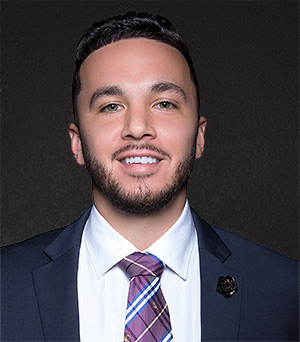
A native South Texan, Joseph Guevara hails from Corpus Christi, Texas. He earned his bachelor’s degree in business finance from the Bauer School of Business at the University of Houston, where he was actively involved in community-focused organizations and recognized for his academic achievements. Joseph obtained his law degree from Texas Southern University’s Thurgood Marshall School of Law, where he was a member of the Hispanic Law Student Association. During law school, he gained valuable legal experience through practicums with the General Consulate of Mexico, the Bexar County District Attorney’s Office in the Special Victims’ Unit, and the Torres Law Firm in Corpus Christi, Texas.